The impact of translation in Africa reaches far beyond words on a page. Translators and…
The Power of Translation Services during Easter Festivities in Africa

Easter translation helps millions of Christians across Africa follow sermons, sing hymns and share the meaning of the season in their own languages. Easter is the most important festival in the Christian calendar. It marks the death and resurrection of Jesus, and churches across the continent fill for Holy Week services. However, a single congregation may include speakers of several languages. This article explains the role of Easter translation in Africa, with examples from Uganda. It also covers the challenges involved and tips for churches, media houses and organisations.
On this page
Easter Across Africa
Christianity has a long history in Africa. For example, the Ethiopian Orthodox and Egyptian Coptic churches trace their roots back many centuries. Today, large Christian communities live across East, Central, West and Southern Africa.
Easter customs also vary widely. In Ethiopia, many Orthodox Christians observe a long fast before celebrating Easter, known as Fasika. Elsewhere, churches hold Way of the Cross processions, all-night vigils and joyful Easter Sunday services. Families often share a special meal after church.
Easter in Uganda
Uganda is a largely Christian country. According to census figures summarised in this overview of religion in Uganda, Catholics, Anglicans and Pentecostals together make up a large majority. Good Friday and Easter Monday are national public holidays. In addition, Ugandan Christians worship in many languages, such as Luganda, Runyankole, Lusoga, Acholi, Ateso and English. So Easter translation plays a real part in church life.
Why Easter Translation Matters
Easter carries deep meaning for believers. They want to understand every reading, prayer and sermon. When a service uses only one language, some people may follow just part of it.
Translation helps in several ways. First, it lets churches reach mixed congregations, especially in cities like Kampala. Second, it helps visiting preachers speak to local audiences. Third, it allows broadcasts and online services to reach wider communities. Finally, it helps churches share the Easter story with children and new believers in simple language.
Good translation also shows respect. When a church speaks to people in their mother tongue, it tells them they belong. For many worshippers, hearing the Easter story in the language of their childhood makes it more personal and moving.
Where Easter Translation Is Most Needed
Sermons and preaching
In practice, many churches use live interpreters during big services. For instance, at large crusades and conventions in Uganda, an interpreter often stands beside the preacher. The preacher speaks a sentence, and the interpreter repeats it in Luganda or another language. This style, called consecutive interpretation, needs speed, energy and accuracy. Our interpretation services support events like these.
Scripture readings and liturgy
Generally, most churches read Easter passages from Bibles in local languages. Bible translation in Uganda has a long history, and the Bible is available in many Ugandan languages today. However, churches may still need service booklets, prayers and responses translated for special events.
Hymns and worship songs
Of course, music is central to Easter. Yet translating a hymn is one of the hardest tasks a linguist can face. The words must keep their meaning, and they must also fit the tune.
Passion plays and children’s programmes
Many churches and schools stage dramas about the Easter story. Scripts may need translation, so actors and audiences can follow. Similarly, Sunday school materials work best in the language children speak at home.
Broadcasts and livestreams
Meanwhile, radio and TV stations air Easter services and special programmes. Many churches also stream services online. Subtitles help viewers who speak other languages, as well as people with hearing loss. See our subtitling services for more.
Charity and outreach
In addition, churches often run Easter outreach, such as food drives or hospital visits. Translated leaflets and appeals help these efforts reach more people.
Marketing and greetings
Businesses send Easter greetings and run seasonal offers. However, religious themes need a respectful tone. Our marketing translation services help brands get it right.
Easter Translation in Multilingual City Churches
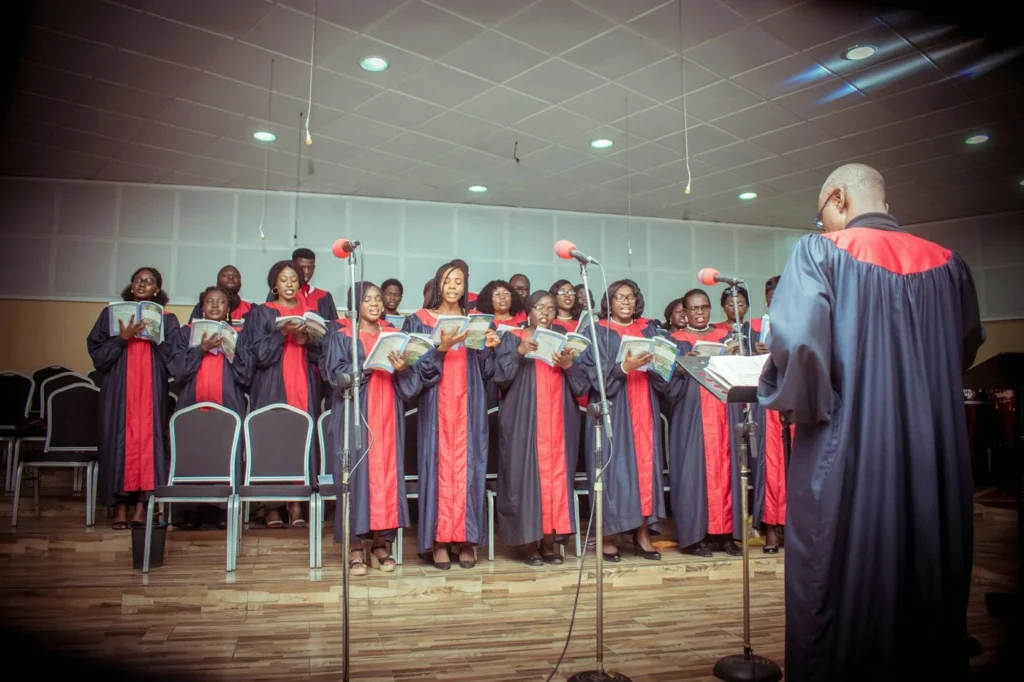
City churches often serve people from many regions. In Kampala, for example, a single parish may hold services in English, Luganda and other languages. Some churches print bilingual bulletins, while others project lyrics in two languages on screens.

During Holy Week, these churches face extra demand. Visitors, relatives from upcountry and foreign guests all attend. As a result, Easter translation helps everyone feel welcome. Even a simple bilingual order of service can make a big difference.
Easter Translation for Conventions and Visiting Preachers
Easter often brings large conventions, revivals and guest speakers. Some preachers travel from other African countries or from abroad. They may speak English, French or Kiswahili, while the crowd prefers a local language.
In these cases, a skilled interpreter becomes the preacher’s voice. Therefore, organisers should book interpreters early and share the programme with them. They should also plan for breaks, because interpreting for long sessions is tiring. For multi-day events, two interpreters can take turns.
The Wider Story of Bible Translation in Africa
Easter readings rely on decades of Bible translation work. Missionaries, African scholars and Bible societies have translated scripture into hundreds of African languages. Moreover, this work continues today, as teams translate into languages that still lack a full Bible.
These translations did more than serve churches. In many cases, they also helped standardise spelling and grammar in African languages. So Easter translation today builds on a long and influential tradition.
Challenges of Easter Translation
Theological terms
Words such as resurrection, atonement and grace carry precise meaning. Different churches may also prefer different terms. Therefore, translators should follow each church’s established vocabulary.
Singable hymns
A hymn translation must match the rhythm and number of syllables in the tune. In addition, many African languages are tonal. A word’s tone may clash with the melody, which can change its meaning. As a result, hymn translators often work with musicians.
Consistency with scripture
Congregations know their Bible translation well. So quotes in booklets or slides should match the version the church uses. Otherwise, worshippers may feel confused.
Live pressure
Interpreters at Easter services often work for hours in front of large crowds. They must keep up with passionate preaching and quick changes. Preparation, such as reading the sermon outline, helps a lot.
Interpreters also need rest and water between sessions. Likewise, they benefit from a quiet spot near the stage and a clear view of the speaker. These small steps keep quality high for the whole service.
Easter Greetings in Different Languages
- English: “Happy Easter”
- Kiswahili: “Pasaka njema”
- French: “Joyeuses Pâques”
- Portuguese: “Feliz Páscoa”
- Spanish: “Felices Pascuas”
Local churches also use greetings in their own languages. Therefore, it is wise to ask native speakers which forms they prefer.

Tips for Successful Easter Translation
- Start early. Prepare booklets, slides and scripts weeks before Holy Week.
- Brief interpreters. Share sermon notes, readings and song lists in advance.
- Use the church’s Bible version. Keep quotes consistent with familiar texts.
- Work with musicians. Test translated hymns by singing them.
- Get a second review. Our proofreading and editing step catches errors before printing.
- Plan for online viewers. Add subtitles or translated summaries to livestreams.
An Easter Translation Checklist
Use this quick checklist when planning your Holy Week materials:
- List every language your congregation and viewers use.
- Collect all texts early, such as readings, prayers, songs and notices.
- Confirm which Bible version each language service uses.
- Book interpreters for key services, and send them notes in advance.
- Plan subtitles or summaries for livestreams and recorded sermons.
- Leave time for a second linguist to review every printed item.
- Finally, keep copies, so you can reuse and improve them next year.
How Ugaafrik Editors Can Help
Ugaafrik Editors is a translation and interpretation agency based in Kampala. We support churches, faith-based organisations, schools, media houses and businesses across Uganda and Africa. We work in Luganda, Runyankole, Kiswahili, French and many more languages.
Our process is simple. First, we review your material and send a quote. Next, we assign a native-speaker linguist. After translation, a second linguist edits and proofreads the text. Finally, we run quality checks and deliver on time.
Frequently Asked Questions
Yes. Good Friday and Easter Monday are both national public holidays in Uganda.
Yes. We can provide consecutive interpreters for services, conventions and events, either on site or remotely.
Yes. We translate hymn lyrics, and we recommend testing them with your choir or musicians.
Ideally, start several weeks before Holy Week. This gives time for translation, review and printing.
Plan Your Easter Translation Today
Whether you lead a church, run a ministry or produce Easter broadcasts, clear language helps your message reach every heart. Explore our translation services in Uganda and Africa. Then request a quote or contact us to start planning.
Get a free quote
Tell us your language, document or event and deadline. We reply quickly with a clear price.
- Native-speaker linguists
- Second-linguist quality check
- Confidential, NDA on request
Our services
Popular languages
Talk to us
Phone: +256 781 683766
Email: info@ugaafrikeditors.com
Office: 2nd Floor L2-20, Kisakye Business Centre, Ntinda, Kampala

Related Posts